SustainSpace has kicked off its 2016 Fundraising Campaign. This campaign will provide funding to new writers and seed grants to students and others who are working on related products. Help SustainSpace continue the mission to promote sustainability and space. Donate here today!
Author Archives: Mark Ciotola
Call for a Open Source Life Support Toolset
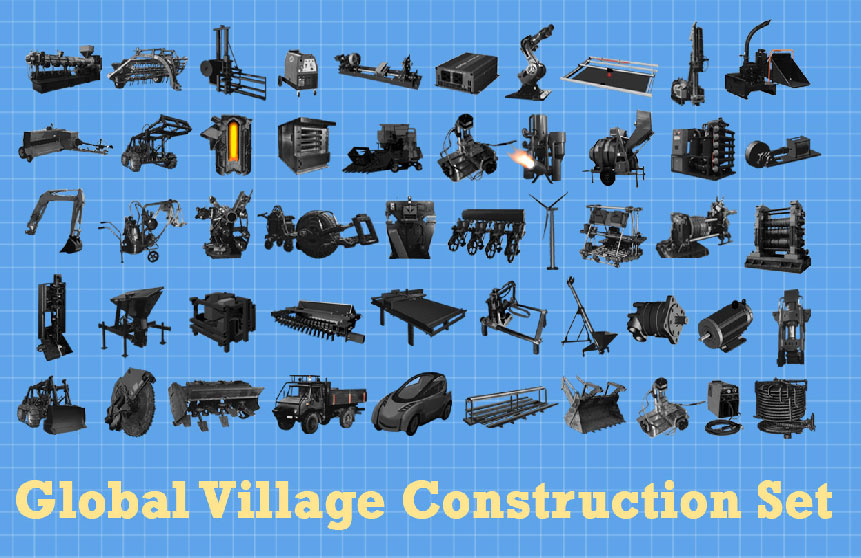
Open Source Ecology’s Global Village Construction Set provides a “modular, DIY, low-cost, high-performance platform that allows for the easy fabrication of the 50 different Industrial Machines that it takes to build a small, sustainable civilization with modern comforts.” An important point about machine tools is that they are a sort of ecosystem, where the various tools are used in combination to build each other. For example, a lathe can be used to make many of the components required for a milling machine, and vice versa. This construction set is also open source.
NASA Targets Reduced Water Usage for Long Duration Missions
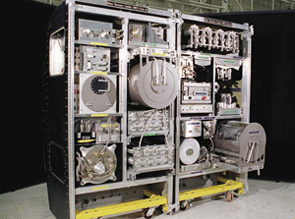
Water is essential for human survival on Earth and in space. A typical person requires between 3.5 to 15 liters per day. Yet launching large quantities of water up to the International Space Station (ISS) is terribly expensive, and would be a major impediment to future space settlement. So NASA has made water recycling a vital part of closing the life support “loop”. Meanwhile, water is often in short supply even on the Earth, especially in a clean, drinkable form.
Lettuce Garden Sent to ISS

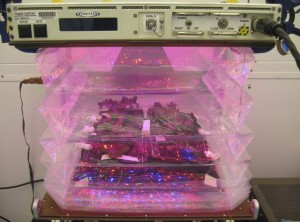
Veggie plant growth chamber (NASA/Bryan Onate)
A transparent plastic growth chamber bound for the International Space Station on the SpaceX-3 resupply mission may help expand in-orbit food production capabilities, and offer astronauts fresh produce.
NASA’s Veg-01 experiment will be used to study the in-orbit function and performance of a new expandable plant growth facility called Veggie. Veggie is a low-cost plant growth chamber that uses a flat-panel light bank that includes red, blue and green LEDs for plant growth and crew observation. Veggie’s unique design is collapsible for transport and storage and expandable up to a foot and a half as plants grow inside it. The roots and nutrients for the plant are contained in plant “pillows”. The investigation will focus on the growth and development of “Outredgeous” lettuce seedlings in the microgravity environment.
eXploration Habitat (X-Hab) Academic Innovation Challenge 2015
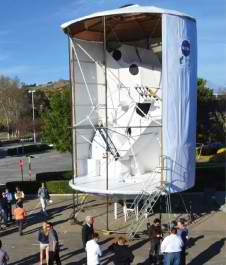
The eXploration Habitat (X-Hab) 2015 Academic Innovation Challenge is a university-level competition involving hands-on design, research, development, and manufacture of functional prototypical subsystems for space habitats and deep space exploration missions. The Advanced Exploration Systems (AES) Exploration Augmentation Module (EAM) project will offer multiple X-Hab awards of $10k – $20k each.
NASA will benefit from the challenge by sponsoring the development of innovative concepts and technologies from universities, which will result in innovative ideas and solutions that could be applied to exploration.
Sub-Arctic Biodome: Prototype for Space Settlement?
The Earth Organisation for Sustainability (EOS) is building a geodesic biodome near the edge of the Arctic Circle, with the goal of self-sufficient food production. EOS has received an European Union grant of 34,000 € delivered by URnära, for construction materials and initial wages, and is working with Green Free Will.
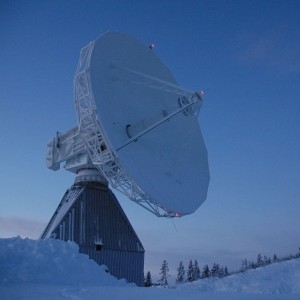
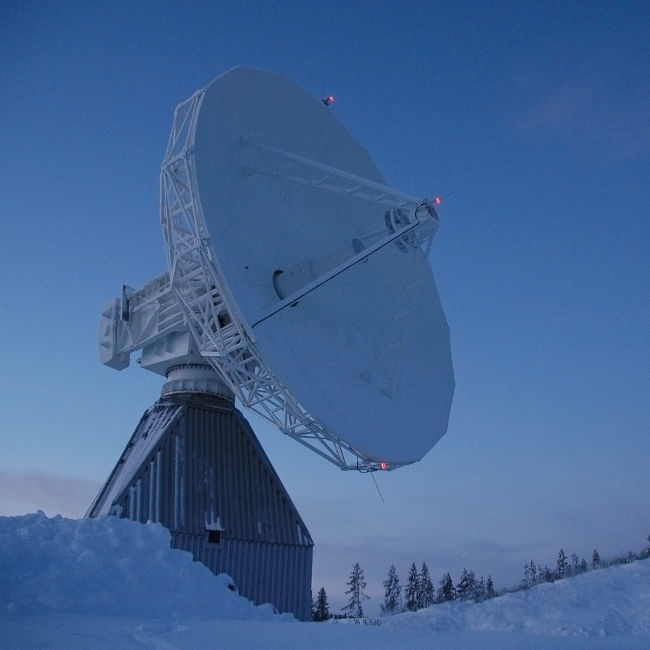
The EOS is developing both technology and social systems for self-sufficent communities of the future. So the Biodome can provide lessons for developing space settlements, such as on Mars. Umeå is in Northern Sweden, just a few hundred kilometres from the Esrange Space Center in Kiruna. Though Umeå is not as far north as the Flashline Mars Arctic Research Station near Resolute, Canada, sunlight is in short supply much of the year, and temperatures can get as cold as -38C (-36 F).
WEST 2014 Call for Solutions Deadline: January 15, 2014
NASA Ames Sustainability Base wins 2013 GEELA Award
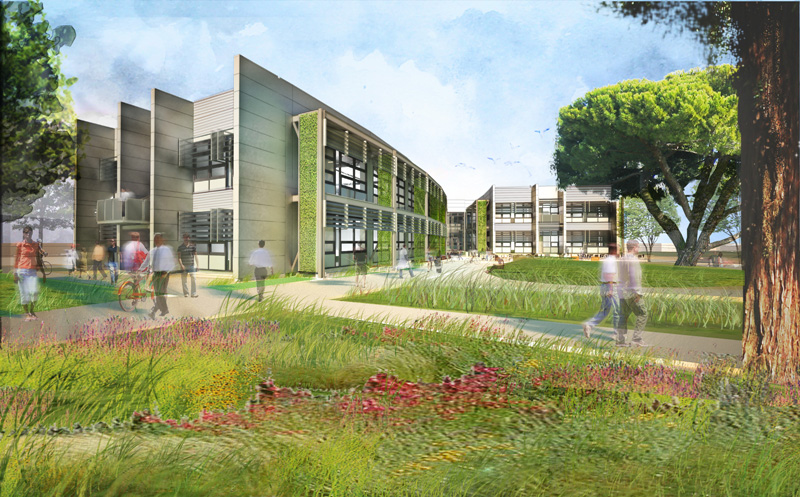
NASA Ames Sustainability Base wins a 2013 GEELA Award for the category of Sustainable Practices or Facilities. The GEELA Program, which stands for Governor’s Environmental and Economic Leadership Awards, is run by the California Environmental Protection Agency (Cal/EPA).
Introduction
NASA’s first sustainable space “settlement” is located in the heart of Silicon Valley, at the NASA Ames Research Center in California. “Using NASA innovations originally engineered for space travel and exploration, the 50,000 square-foot, lunar-shaped Sustainability Base is simultaneously a working office space, a showcase for NASA technology and an evolving exemplar for the future of buildings.” (Ames website). Through a combination of NASA innovations and commercial technologies, Sustainability Base leaves virtually no footprint.